ChatGPT Ads Now Has Custom Audiences: Here Is How To Use It
ChatGPT Ads now lets you upload customer lists as custom audiences. Whether the sharpest first use is targeting or exclusion depends on your goal. Here is the practitioner read, including the privacy question that matters.
Craig Graham
•
August 25, 2026
ChatGPT Ads quietly added a custom audiences feature, and it is a bigger signal than it first appears. You can now upload a list of your own customers, an email or phone list, and use it to shape who sees your ads. That moves the platform a step closer to the kind of first-party data targeting that serious advertisers already rely on in Google and Meta.
I set this up in a live account this week, so I want to give you the practitioner read: what it actually does, the first thing worth doing with it, the privacy question you should be asking, and how to think about it inside a measured acquisition strategy rather than in isolation.
Start by deciding: target or exclude?
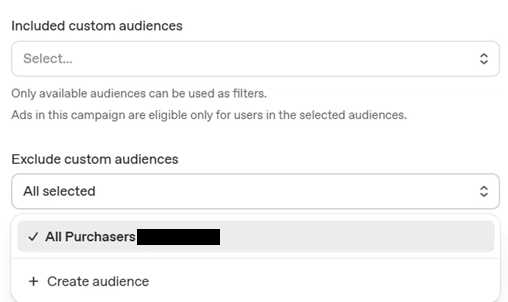
Audience Inclusion and Exclusion Inside Campaign Settings
When a new targeting feature lands, the instinct is to use it to reach people. But depending on your goal, the sharper first use can be the opposite: use it to stop reaching people.
In the account I set this up on, the goal is new-customer acquisition. So the first thing I did was upload our existing purchasers as a custom audience and exclude them from the campaign. Every dollar the campaign spends now goes toward reaching people who have not already bought, rather than paying to show ads to customers we already have. When your objective is acquisition, suppressing your existing base is one of the cleanest efficiency gains available, and it is now possible on this platform on day one.
If your goal sits higher in the funnel an audience of past purchasers or a loyalty list used as an include can power a focused retention or win-back campaign, and a higher-funnel list can be exactly who you want to reach. The point is to decide deliberately which one serves your goal, rather than defaulting to targeting because that is what the feature seems designed for.
How it works, briefly
The setup itself is straightforward. In the Ads Manager, under Audiences, you create an audience and upload a list. You give it a name, choose the identifier type, and upload a CSV or TXT file. The platform then matches your list against its users and, once processing is done, the audience shows as ready with an approximate count of matched users. From there, at the campaign level, you apply that audience as either an included or an excluded custom audience.
One practical note on match rates: expect to match a portion of your list, not all of it, the same as on any other platform. Only the people whose details match an account will be found. A modest match rate is normal and not a sign anything is wrong, but it does mean you should think of these audiences as directional rather than complete, which matters when you are relying on an exclusion to protect spend.
The minimum size question, and what my account actually shows
There has been discussion in the industry about a minimum audience size, with a tooltip in the interface referencing a requirement of at least 100,000 identifiers, and an open question about whether that means 100,000 uploaded or 100,000 matched. That distinction matters a great deal, because match rates on this platform are likely to be low, so a 100,000 matched requirement would put the feature out of reach for most advertisers.
My own account offers a useful data point on this. The list I uploaded contained more than 100,000 identifiers, and it matched into a bucket the interface reports as 25,000 to 100,000 users. That matched audience is live and usable, selectable for both inclusion and exclusion in campaign setup. Since the matched count sits below 100,000 and the audience still works, the 100,000 threshold appears to apply to the identifiers you upload, not the users that ultimately match. In practice, that means you need a sizeable source list to use this feature at all, but you do not need 100,000 matched users, which is a much lower bar to clear.
I would treat this as current rather than settled. The platform is early, largely undocumented, and behaviour like this can change without notice, so check what your own account shows rather than relying on any single figure, including mine.
The privacy question you should be asking
This is the part that matters most if you work with regulated or privacy-conscious clients, and it is worth thinking through before you upload anything.
When you upload a customer list, you can provide raw emails and phone numbers, or you can hash them first. Hashing, using SHA-256, converts each email or phone number into an irreversible string before it ever leaves your side. The platform matches on the hashed values either way, because it applies the same hashing to its own side. The practical difference is who sees the raw data. Upload raw, and you are handing a third party your customers' actual contact details. Hash first, and the platform never sees the underlying emails, only the hashes, while the matching still works.
For a list of existing purchasers used to exclude them from a campaign, raw upload is usually an acceptable tradeoff. For a healthcare client, or any advertiser where the customer list itself is sensitive, client-side hashing is the responsible default, and it is worth building your process around it from the start. If you normalise your data first, trimming whitespace and lowercasing emails so the hashes match reliably, the hashed approach costs you almost nothing and meaningfully reduces what you expose. The fact that the platform offers a hashed identifier option at all is worth taking as an invitation to use it.
Where this fits in a measured strategy
Used well, exclusion of existing customers tightens acquisition efficiency, and a targeted include can power a focused retention push. Used carelessly, audience features encourage narrow targeting that starves the platform of the room it needs to find new customers, or they get switched on without any way to measure whether they actually helped.
The discipline is the same as it is everywhere else in paid media. Decide what outcome you are optimising for, use the audience to serve that outcome, and measure the result against your blended numbers rather than trusting that the feature helped simply because it exists. That is the same thinking behind how we measure a complex media mix when a new platform joins it. On a young platform especially, the advertisers who win will be the ones who adopt new tools thoughtfully and measure them honestly, not the ones who switch on everything the moment it appears.
Custom audiences are a genuine step forward for ChatGPT Ads, and worth setting up now. Just be deliberate about how you use them.
If you want help thinking through how ChatGPT Ads fits your paid media strategy, or how to measure it honestly alongside Google and Meta, that is the kind of thing we help with. You can book a discovery call with me here.
.svg)


.png)
.png)
.png)
.png)
.png)
.png)

.svg)
.png)


.svg)

.svg)